Bible Insight
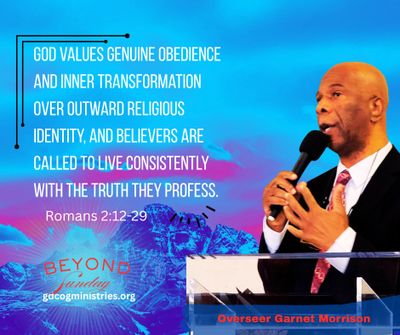
Bible Study |Focus: Romans Chapter 2|5/6/2026 with Garnet Morrison, Overseer/Senior Pastor
Quick recap
This was a Bible study focused on Romans chapter 2, where Overseer Garnet Morrison led the discussion on verses 12-29. The study explored Paul's teachings about how both Jews and Gentiles are judged by different standards - Jews by the Mosaic law and Gentiles by their consciences - but ultimately all will be judged by Christ Jesus on Judgment Day. He emphasized the importance of living according to what one preaches, warning against hypocrisy and the need for true circumcision of the heart by the Holy Spirit rather than just outward religious practices. The conversation ended with prayer and reflection on the responsibility of believers to live in accordance with God's Word.
Summary
The Bible study session emphasized that God judges based on truth rather than ethnicity, religious status, or color, and explained that those who have sinned without the law will perish without the law, while those who have sinned under the law will be judged by the law. The group was encouraged to read the chapter ahead of time, similar to preparation for Sunday school lessons.
Law and Righteousness Discussion
He explained the difference between "having the law" and "keeping the law," discussing how Jews are judged by the Mosaic law while Gentiles are judged by their consciences. He emphasized that hearing the law without doing it does not justify someone before God, and that true righteousness comes from both hearing and obeying the law. The discussion highlighted that even Gentiles who don't have the Mosaic law naturally follow its requirements through their consciences.
Moral Conscience and Divine Law
He discussed Paul's teachings about moral conscience and the law, explaining that even without the Mosaic law, Gentiles have an inner moral law written on their hearts through conscience. He described how conscience functions by both accusing and defending people, creating conflicting thoughts about right and wrong. He concluded by stating that both Jews and Gentiles stand guilty before God, whether through the law or through moral conscience, as they will all face judgment based on their knowledge of right and wrong.
Biblical Concept of Judgment
He led a discussion on the biblical concept of judgment, focusing on Apostle Paul's teachings about God judging the secrets of men through Christ Jesus. The group explored questions about what specific day this judgment would occur and who would be judged, with him explaining that while judgment will happen, believers will not be judged for sin as Jesus paid the price for sin, but rather for their deeds. He emphasized that both those who received the law and those who didn't will be judged based on their moral conscience and actions.
Biblical Definition of Jewish Identity
He discussed the biblical definition of who is considered a Jew, explaining that historically a Jew was someone from the tribe of Judah. He distinguished between Jews from the tribe of Judah and Israelites from the other 12 tribes, noting that these groups sometimes had conflicts, as seen in Acts 6:1 where Grecian Jews complained about being treated differently from Hebrews. He explained that while both groups claimed special connection to God, they were proud of their lineage but often failed to live according to the law they believed in.
Living by God's Law Teachings
He discussed Paul's teachings on the importance of living according to the law and setting an example for others, particularly for Jewish believers. He emphasized that true circumcision is of the heart, performed by the Holy Spirit, rather than just physical circumcision. He warned against hypocrisy, stating that those who teach and preach God's word must also live by it, otherwise they risk causing others to blaspheme God's name. He concluded by encouraging the audience to strive to live righteously in the presence of God and to seek strength from the Lord when they stumble.
Spiritual Circumcision and Jewish Identity
He and others discussed the concept of spiritual circumcision and its relationship to being a spiritual Jew. He explained that under the current administration of grace, physical circumcision is no longer required, and true circumcision now refers to the circumcision of the heart. He clarified that being a spiritual Jew refers to being a member of the body of Christ, rather than an actual descendant of the tribe of Judah. Others agreed with his explanation, emphasizing that the current administration focuses on inward transformation rather than outward rituals or practices.
True Circumcision of the Heart
He discussed the concept of true circumcision being of the heart, emphasizing that God's Spirit cleanses and brings fellowship rather than physical circumcision. An Evangelist asked about judgment in the Bible, and He explained that both circumcised and uncircumcised individuals will be judged based on their moral knowledge and conscience. He concluded by encouraging the group to seek God's presence, grow in faith, and support one another through prayer and Bible study.
Church Prayer Service Meeting
The Bible study and prayer meeting at Greater Deliverance Church of God Ministries end with prayers and reflections, expressing gratitude for the year and asking for blessings for the church community, including ministers, deacons, and officers. Prayers for those who couldn't attend, seeking blessings and guidance for them. The group also prayed for healing for the sick and salvation for children and grandchildren. The service concluded with thanks and blessings with participants exchanging farewells and well-wishes.
📖 Key Discussion Themes
1️⃣ God’s Judgment Is Based on Truth, Not Status
The group explored how God judges all people impartially, regardless of ethnicity, background, or religious identity.
· Jews are judged by the Mosaic law
· Gentiles are judged by their conscience
· Ultimately, all are accountable and judged through Christ Jesus
2️⃣ Hearing vs. Doing the Law
A central point was the difference between knowing God’s law and actually living it:
· Simply hearing or teaching the law does not justify a person
· Obedience and action are what matter
· Hypocrisy—preaching without practicing—was strongly warned against
3️⃣ Conscience as an Inner Moral Guide
The discussion highlighted that even without the Mosaic law:
· People have a moral compass (conscience) written in their hearts
· Conscience can accuse or defend actions
· This reinforces that everyone has awareness of right and wrong
4️⃣ Universal Accountability Before God
Key takeaway:
· Both Jews and Gentiles are guilty before God in different ways
· Judgment will consider knowledge, actions, and inner motives
· Believers are not judged for sin (due to Christ’s sacrifice) but for their deeds
5️⃣ True Identity and “Circumcision of the Heart”
The group discussed spiritual identity:
· Being a true follower is not about external rituals (like physical circumcision)
· It is about inner transformation by the Holy Spirit
· “Circumcision of the heart” represents genuine faith and obedience
6️⃣ Call to Authentic Christian Living
He emphasized:
· Believers must live according to what they teach
· Failure to do so can lead others away from God
· Growth requires ongoing effort, prayer, and reliance on God
BIBLE INSIGHT
KEY TAKEAWAYS |BIBLE STUDY|ROMANS 6:12-23 | 7-15-2026 with Garnet Morrison, Overseer/Senior Pastor
Theme and Focus
The study centered on Romans Chapter 6, verses 12–23, emphasizing how believers are no longer slaves to sin but are called to serve righteousness through Christ. Overseer Garnet Morrison led the session, guiding participants through Paul’s contrast between life under sin’s dominion and life under God’s grace.
Dominion of Sin vs. Dominion of Grace
- Sin seeks to reign as a ruler over the human body, commanding obedience.
- Believers, being renewed in Christ, have the authority to refuse sin’s rule.
- Grace liberates, rather than excuses sin. It equips believers to live in holiness and freedom from sin’s power
Members as Instruments of Righteousness
The discussion highlighted how body “members” (tongue, eyes, ears, hands, feet) can serve righteousness or unrighteousness:
- Tongue: Can sin through lying, gossip, or complaining; or glorify God through truth, prayer, worship, and encouragement.
- Eyes: Should discern needs, focus on purity, and seek good.
- Ears: Must reject gossip and false teaching, remaining attuned to God’s Word.
- Hands: To be used for honest work and service, not stealing or idleness
Grace Removes Sin’s Dominion
Grace provides freedom from legalism and bondage, enabling obedience motivated by love rather than obligation. Paul clarifies that grace is not a license to sin, but a power to sustain holiness and integrity
Servitude: Sin or God
- Each person “yields” to something — sin that leads to death or obedience that leads to righteousness.
- Servitude to sin ends in shame, debt, and spiritual death.
- Servitude to God results in righteousness, holiness, and eternal life.
- True freedom exists only in obedience to God’s Word
Practical Application
- Yield daily to God through obedience and righteousness.
- Replace old sinful habits with new spiritual disciplines — prayer, study, worship, and service.
- Small acts of obedience build a lifestyle of holiness, forming new desires and habits in Christ
Faith and Encouragement
- Believers were urged not to condemn themselves when they stumble; rather, to stand firm in grace and continue striving for holiness.
- The imagery of being close to God like a shadow illustrates intimacy and imitation of God’s nature when walking near Him
Summary Message
Believers must consciously live as instruments of righteousness, submitting every part of their being to God. Through grace, they are empowered to overcome sin, cultivate holiness, and experience the joy and freedom of serving God wholeheartedly.
BIBLE INSIGHT

BIBLE STUDY|KEY TAKEAWAYS | ROMANS 7:1-13 | 7-22-2026 WITH GARNET MORRISON, OVERSEER/SENIOR PASTOR
Theme and Focus
The study centered on Romans Chapter 6, verses 1-13.
He explaining how the law reveals sin but cannot deliver from it, while God's grace brings life and deliverance. He used the analogy of marriage laws to illustrate how the law's authority ends at death, comparing it to how Christians become dead to the law through Christ's death and resurrection. The discussion focused on how believers are freed from the burden of sin to serve God in newness of spirit rather than being bound by the letter of the law.
The Law Reveals Sin but Cannot Deliver from It
The law exposes humanity's sinfulness but has no power to save or deliver.
- Romans 7:7 – "I would not have known what sin was had it not been for the law."
- Romans 3:20 – "Through the law we become conscious of our sin."
The Law Has Dominion Only While We Are Alive
Using the marriage analogy, the law's authority ends at death — and through Christ, believers die to the law and are no longer bound by it.
- Romans 7:1-4 – The marriage law illustration; we are released from the law through the body of Christ.
Freedom Through Christ's Death and Resurrection
Believers are dead to the law through Christ and are no longer under its condemnation or burden.
- Romans 6:6-7 – "Our old self was crucified with him… anyone who has died has been set free from sin."
- Galatians 2:19 – "I died to the law so that I might live for God."
Living in the Newness of the Spirit
Grace replaces the old system; believers are freed to serve God by the Spirit rather than being bound by the letter of the law.
- Romans 7:6 – "We serve in the new way of the Spirit, and not in the old way of the written code."
- 2 Corinthians 3:6 – "The letter kills, but the Spirit gives life."
Sin Uses the Law to Deceive and Bring Death
Though the law is holy and good, sin exploits it to deceive humanity and lead to death rather than life.
- Romans 7:9-11 – "Sin, seizing the opportunity afforded by the commandment, deceived me, and through the commandment put me to death."
- Exodus 20:17 – The commandment against covetousness used as an example.
Jesus Conquered the Law of Sin and Death
Christ fulfilled the law, removing the reign of sin and death and giving believers access to new life under the New Covenant.
- Romans 8:2 – "The law of the Spirit who gives life has set you free from the law of sin and death."
- Matthew 5:17 – "I have not come to abolish the Law but to fulfill it."
Discussion Questions
- What is the purpose of the law according to Romans 6-7, and why can it reveal sin but not deliver us from it?
- How does the marriage analogy in Romans 7:1-4 help us understand our relationship to the law as believers?
- In what ways does sin use the law to deceive and bring death, even though the law itself is holy and good?
- What does it mean practically to "serve in the newness of the Spirit" rather than the letter of the law in your daily life?
- How does Christ's death and resurrection free believers from the law of sin and death?
- What is the difference between the law of Moses and the law of sin and death? How are believers delivered from both?
- How does the law point us toward Christ? Can you share an example from your own life where the law brought awareness of sin and led you to grace?
- Romans 7:9-11 says sin used the commandment to deceive. How do we guard ourselves against sin's deception today as New Covenant believers?
BIBLE INSIGHT
BIBLE STUDY|RECAP | KEY TAKEAWAYS | ROMANS 9:1-13 | 8-26-2026 WITH GARNET MORRISON, OVERSEER/SENIOR
Quick Recap
This was a Bible study meeting where Overseer Garnet Morrison led a detailed discussion on Romans 9:1-13, focusing on Paul's heaviness and sorrow over his fellow Jews who were rejecting the gospel. He explained how Paul compared the children of Isaac (the promised seed) to those of Ishmael (children of the flesh), using this to illustrate how God's election and calling work independently of human descent or relationship with him reading from Galatians 4:22 to illustrate this point. The group discussed how God's sovereign choice to bless Jacob over Esau demonstrates that salvation comes through God's grace rather than works or lineage, and he emphasized that believers should share Paul's concern for the salvation of others, engaging in evangelism and prayer while recognizing that ultimate conversion comes through God's drawing. The conversation ended with a prayer led by Pastor Morrison emphasizing trust in God's plan and faithfulness to the church.
KEY TAKEAWAYS
Paul's Burden for the Lost – Apostle Paul expressed deep sorrow and heaviness over his fellow Jews rejecting the gospel, even willing to be cursed himself for their salvation.
Children of the Flesh vs. Children of the Promise – Paul distinguished between Ishmael's descendants (children of the flesh) and Isaac's descendants (children of the promise), illustrating that physical lineage does not determine spiritual inheritance.
God's Sovereign Election – God's choice of Jacob over Esau before their birth demonstrates that salvation is based on divine purpose and grace, not human works, merit, or lineage.
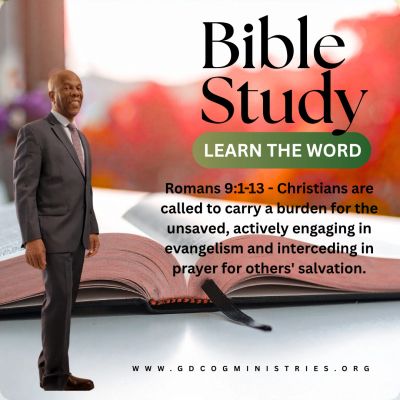
Believers Should Share Paul's Concern – Christians are called to carry a burden for the unsaved, actively engaging in evangelism and interceding in prayer for others' salvation.
God Draws People to Salvation – While believers are responsible to witness and pray, ultimate conversion rests in God's sovereign drawing — a spiritual matter beyond human understanding or control.
Bible Insight
BIBLE STUDY| QUICK RECAP | KEY TAKEAWAYS | ROMANS 9:14-33 | 9-2-2026 | Led by: GARNET MORRISON, OVERSEER/SENIOR
📋 Quick Recap
The study of Romans 9, focusing on verses 14–33. The lesson explored God's sovereignty in choosing whom to show mercy and whom to harden, using the example of Pharaoh and the Exodus. Key themes included:
- God's absolute authority as Potter over the clay
- The tension between divine sovereignty and human perception of fairness
- The calling of both Jews and Gentiles into God's mercy
- Faith vs. works as the path to righteousness
- Application to contemporary challenges including persecution, national leadership, and global suffering
---
✨ Key Takeaways
1. 🕊️ God's Sovereignty Overrides Human Fairness
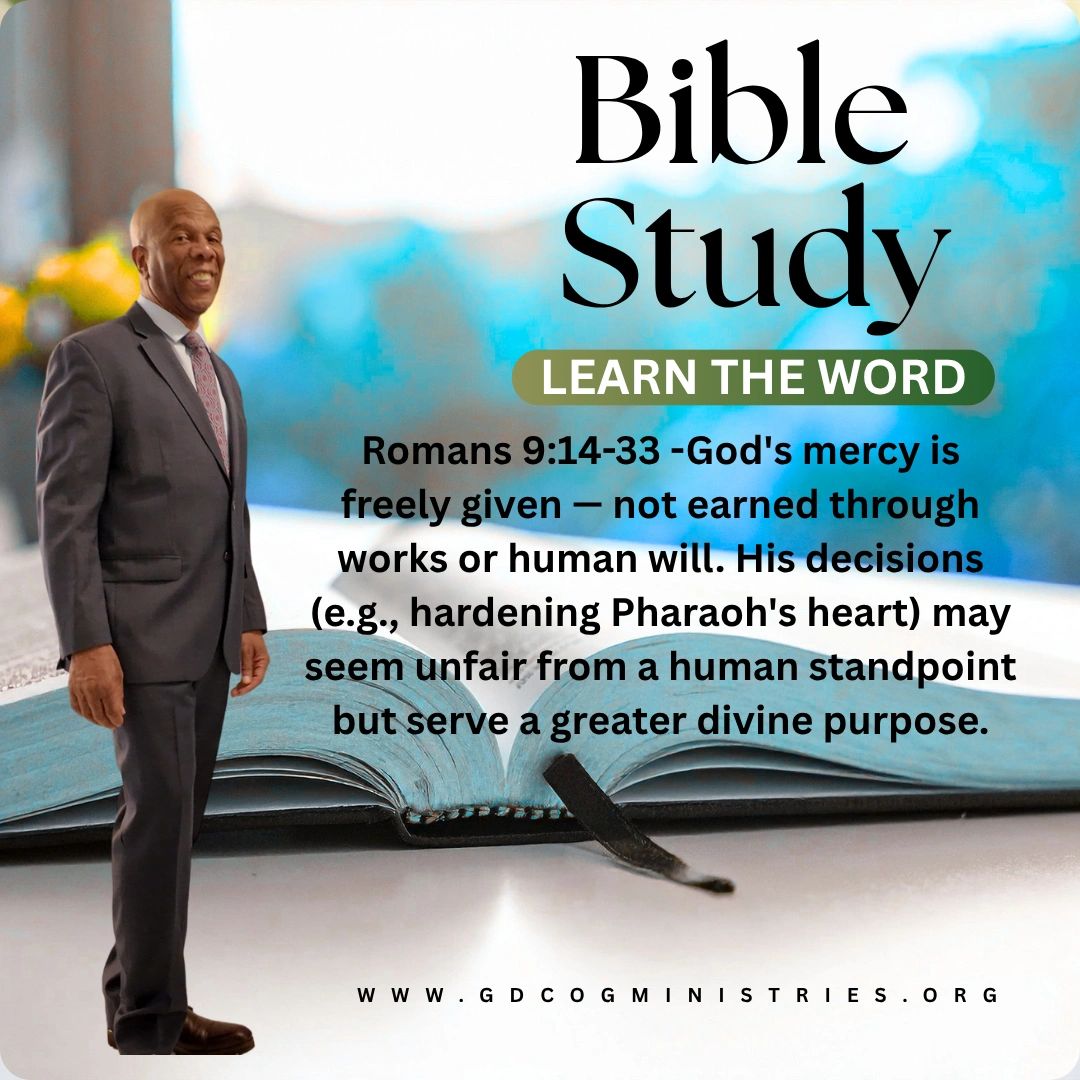
God's mercy is freely given — not earned through works or human will. His decisions (e.g., hardening Pharaoh's heart) may seem unfair from a human standpoint but serve a greater divine purpose.
2. ⏳ God's Timing Is Intentional
The extended plagues were not delays — they were deliberate. God used them to demonstrate His power to all nations, build Israel's faith, and declare His name throughout the earth.
3. 🏺 God Is the Potter; We Are the Clay
Humans have no authority to question God's design. Whether formed as vessels of honor or dishonor, every person serves a purpose in God's plan (Romans 9:20-21, 2 Timothy 2).
4. 🔥 Persecution Can Be a Divine Instrument
Even persecutors — including those within the church — may be instruments God uses to test faith, build spiritual maturity, and draw believers into deeper dependence on Him.
5. 🌍 God's Hand Is in All Things — Including Current Events
From national leadership to natural disasters, God is sovereign. Every leader is placed and removed by God; every tragedy exists in tension with His mercy and ultimate glory.
6. 🪨 Faith, Not Works, Is the Path to Righteousness
Israel stumbled by seeking righteousness through the law. Gentiles obtained it by faith. Christ as the "stumbling stone" is central — righteousness comes through trust in Him, not human effort.
7. 🙏 Intercession Is a Corporate Responsibility
The closing prayer reflected the group's burden for others: a family affected by immigration-related tragedy, suffering in Nepal, and a nation in need of peace — saints are called to pray for the voiceless.
---
Bible Study
Every Wednesday
on Zoom